

However, as the real estate technology landscape evolves in 2026, users are increasingly seeking alternatives that offer more accurate data, specialized features, broader geographic coverage, and enhanced user experiences. Whether you’re frustrated with Zillow’s Zestimate accuracy, looking for international property options, or simply want to explore what else is available, this comprehensive guide will walk you through the top 10 apps like Zillow that are transforming how we buy, sell, and rent properties in 2026.
From MLS-integrated platforms in North America to leading real estate apps in the UK, India, Canada, and Australia, we’ve curated a diverse list that caters to different markets, needs, and preferences. Let’s dive deep into the world of real estate apps and discover which platform best suits your property search journey.
Market Overview: Real Estate Apps in the USA
The United States real estate app market has experienced exponential growth over the past decade, with the pandemic-era digital acceleration creating a permanent shift in how Americans approach home buying and renting. In 2026, the market is more mature, competitive, and sophisticated than ever before.
The U.S. real estate technology sector is now valued at over $12 billion, with mobile apps accounting for a significant portion of property searches. According to the National Association of Realtors, approximately 97% of homebuyers use the internet during their home search process, with 76% beginning their journey on a mobile device. This mobile-first behavior has pushed real estate companies to invest heavily in app development, creating feature-rich platforms that rival traditional real estate services.
What sets 2026 apart from previous years is the integration of artificial intelligence, machine learning, and big data analytics into real estate apps. These technologies enable more accurate property valuations, personalized recommendations, predictive market insights, and enhanced user experiences. Additionally, the rise of virtual and augmented reality has made it possible for buyers to tour properties from anywhere in the world, fundamentally changing the dynamics of the real estate transaction process.
The competitive landscape includes established giants apps like Zillow, Realtor.com, and Redfin, alongside emerging players offering niche services such as commercial real estate listings, luxury property searches, rental-specific platforms, and international property marketplaces. This diversity means that today’s property seekers have more options than ever to find an app that precisely matches their needs.
Key Trends in the 2026 Real Estate App Market:
Hyper-Personalization Through AI:
Real estate apps in 2026 are leveraging artificial intelligence to deliver highly personalized experiences. Machine learning algorithms analyze user behavior, search patterns, saved properties, and even external data like commute times and lifestyle preferences to recommend properties that match individual needs. This goes beyond basic filtering AI can predict what features matter most to you based on your browsing history and suggest properties you might not have considered but are likely to love.
Real-Time Data Integration:
One of the most significant shifts in 2026 is the expectation for real-time, accurate data. Users are no longer satisfied with listings that may be days or weeks old. Leading apps now integrate directly with Multiple Listing Service (MLS) databases, ensuring that properties are listed, updated, and removed in near real-time. This reduces the frustration of contacting agents about properties that are no longer available and gives buyers a competitive edge in fast-moving markets.
Virtual and Augmented Reality Tours:
While virtual tours became common during the pandemic, 2026 has seen a leap forward with fully immersive 3D walkthroughs, augmented reality features that let you visualize furniture in empty rooms, and even virtual staging. Some premium apps offer VR headset integration, allowing potential buyers to experience properties as if they were physically present, regardless of their location. This technology has been particularly transformative for international buyers and investors.
Integrated Financial Services:
The boundary between real estate search and financial services has blurred significantly. Modern real estate apps now offer integrated mortgage pre-approval, credit score monitoring, affordability calculators, and even direct lending services. This seamless integration allows users to understand their buying power, compare mortgage options, and get pre-qualified without leaving the app streamlining what was once a fragmented, time-consuming process.
Focus on Neighborhood Intelligence:
Today’s buyers want more than just information about the property they want to understand the neighborhood. Apps are now providing comprehensive neighborhood data including school ratings, crime statistics, walkability scores, nearby amenities, demographic information, future development plans, and even noise pollution levels. Some apps use crowdsourced data from actual residents to give authentic insights into what it’s really like to live in a specific area.
Sustainability and Green Features:
With increasing awareness of climate change and sustainability, 2026 real estate apps are highlighting properties with green certifications, energy-efficient features, solar panels, and sustainable building materials. Some apps even calculate the estimated carbon footprint and energy costs of properties, helping environmentally conscious buyers make informed decisions.
Rental Market Sophistication:
The rental segment has matured significantly, with apps offering features like instant lease signing, digital rent payments, roommate matching algorithms, flexible lease options, and furnished rental filtering. The rise of remote work has also led to increased interest in short-term and flexible rentals, which specialized apps are catering to with great success.
Commercial and Investment Focus:
While residential real estate dominates, there’s growing sophistication in apps serving commercial real estate investors, developers, and businesses. These platforms provide detailed financial analytics, cap rate calculations, investment performance metrics, and access to off-market properties, making them indispensable tools for serious investors.
Key Features of Zillow

Before exploring alternatives, it’s essential to understand what has made Zillow the benchmark in real estate apps. Since its launch in 2006, Zillow has continuously evolved to offer a comprehensive suite of features that serve buyers, sellers, renters, and real estate professionals. Understanding these features will help you identify which alternatives might better serve your specific needs.
1. Zestimate® Home Valuation
Zillow’s Zestimate is its most well-known feature, an automated valuation model (AVM) that estimates the market value of over 100 million homes across the U.S. It uses a proprietary algorithm analyzing millions of data points, including recent sales, property details, tax assessments, and market trends, to provide instant valuations.
Zestimate helps sellers set listing prices, guides buyers in evaluating offers, and gives homeowners a sense of their property’s current value. By 2026 , Zillow reports a median error rate of about 2% for on-market homes.
Despite its usefulness, Zestimate has faced criticism for accuracy, especially in areas with few comparable sales or for unique properties. Homes that are recently renovated, located in rapidly changing neighborhoods, or highly customized often see less reliable estimates. These limitations drive some users to seek alternatives with direct MLS pricing or more precise valuation tools.
2. Property Listings (Buy, Sell, Rent)
Zillow aggregates millions of property listings across the U.S., including homes for sale, rentals, apartments, condos, townhouses, foreclosures, and new construction. It partners with brokerages, property managers, and individual landlords to provide a comprehensive property inventory.
Each listing typically includes detailed information such as price, square footage, bedrooms and bathrooms, property type, year built, lot size, and tax assessment. Most listings feature high-quality photos, with many offering video tours or 3D walkthroughs. Users can also access property history, including past sales, price changes, and days on market.
For sellers, Zillow provides tools to create listings, connect with buyers, and promote properties. Its large user base offers significant visibility, though the quality and responsiveness of leads can vary.
3. Virtual Home Tours
Zillow has invested heavily in virtual tour technology to enhance property exploration. Many listings feature 3D home tours powered by Matterport, allowing users to virtually walk through properties on their computers or mobile devices. These tours give a better sense of layout, flow, and space than static photos alone.
Virtual tours became especially important during the COVID-19 pandemic when in-person showings were limited, and they remain popular in 2026 as buyers increasingly research properties remotely. For out-of-state buyers or busy professionals, these tours make it easy to narrow options before scheduling physical visits.
Some listings also include video tours narrated by agents or homeowners, providing insights into property features, recent upgrades, and neighborhood details. This multimedia approach has significantly improved the online property browsing experience.
4. Interactive Map Search
Zillow’s map-based search is one of its most intuitive features, letting users explore properties geographically rather than just through lists. The interactive map displays color-coded pins for different price ranges, allowing users to zoom, draw custom search boundaries, and see properties in relation to schools, workplaces, and local amenities.
The map supports detailed filters, including price, property type, square footage, bedrooms, bathrooms, lot size, parking, and features like pools, hardwood floors, or waterfront access. Users can also filter by days on market, price reductions, and open house schedules.
This visual approach is especially valuable for buyers focused on neighborhoods or exploring unfamiliar areas. It offers context that list views can’t, helping users understand property density, proximity to key locations, and the overall character of each neighborhood.
5. Mortgage & Affordability Tools
Zillow helps users navigate the financial side of home buying with a range of mortgage and affordability tools. Its mortgage calculator lets buyers estimate monthly payments based on factors like purchase price, down payment, interest rate, property taxes, and insurance, while allowing users to test different scenarios.
Daily-updated mortgage rate information enables comparison across loan types, including conventional, FHA, VA, and adjustable-rate mortgages. Zillow’s affordability calculator helps buyers determine how much home they can realistically afford, considering income, debts, down payment, and local property taxes.
For homeowners, Zillow also offers refinance calculators to assess whether current interest rates and mortgage terms make refinancing a smart financial move. These tools give buyers and owners a clear understanding of costs before making major decisions.
6. Agent Finder
Zillow offers an agent finder feature that connects users with local real estate professionals. Users can browse agent profiles, read client reviews, view transaction history, and request contact from agents who specialize in specific areas or property types.
Zillow Premier Agents appear prominently in search results and on listings because they pay for advertising. This means the top-listed agents may not always be the most qualified, creating a potential conflict of interest compared to alternatives that offer more transparent agent matching.
The platform allows filtering by language, experience, and specialization such as buyer’s agent, seller’s agent, or investment properties. While reviews and ratings provide insights into agent performance, their authenticity and detail can vary.
7. School and Neighborhood Data
Zillow provides detailed school and neighborhood information to help buyers make informed decisions. School ratings, sourced from GreatSchools.org, are displayed on a 1–10 scale for elementary, middle, and high schools tied to a specific address. Users can access boundaries, test scores, student-teacher ratios, and links to more detailed school data.
In addition to schools, Zillow offers neighborhood insights including crime statistics, walkability scores from Walk Score, transit scores, and details about nearby amenities such as restaurants, parks, grocery stores, and entertainment options. Some listings even provide demographic data like median income, age distribution, and education levels.
This information helps buyers evaluate not just the property but the surrounding environment. However, the depth and accuracy of these insights can vary, with major metropolitan areas typically offering the most comprehensive data.
8. Saved Searches & Alerts
Zillow’s saved search feature helps users stay updated on properties that match their criteria. Buyers can create multiple searches with customized filters, and Zillow sends notifications for new listings, price changes, or when properties go under contract or off the market.
This is especially useful in competitive markets, where early alerts can give buyers a timing advantage. Users can adjust alert frequency instant, daily, or weekly and select which types of updates trigger notifications. Saved searches sync across devices, allowing users to set up searches on desktop and receive mobile alerts, ensuring they never miss relevant opportunities.
Pros and Cons of Using Zillow
While Zillow has established itself as the most recognizable name in real estate apps, it’s not without its strengths and weaknesses. Understanding both sides helps users make informed decisions about whether Zillow or an alternative better serves their needs.
Pros of Zillow
Massive Property Inventory:
Zillow boasts one of the largest databases of property listings in the United States, with millions of homes for sale, rent, and off-market properties. This comprehensive inventory increases the likelihood that users will find properties that meet their criteria, particularly in suburban and rural areas where smaller platforms may have limited coverage.
User-Friendly Interface:
Zillow’s interface is intuitive and accessible for users of all technical skill levels. The clean design, logical navigation, and well-organized information make it easy to browse properties, save favorites, and manage searches without a steep learning curve.
Free to Use:
Unlike some real estate services that charge membership fees or require subscription models, Zillow is completely free for buyers, renters, and casual browsers. This accessibility has contributed significantly to its widespread adoption.
Comprehensive Filters and Search Options:
Zillow offers extensive filtering options that allow users to narrow down properties by virtually any characteristic from the number of garage spaces to specific architectural styles. This granular control helps users find exactly what they’re looking for without wading through irrelevant listings.
Mobile App Excellence:
Zillow’s mobile app is well-designed, feature-rich, and performs smoothly on both iOS and Android devices. The app includes nearly all the functionality of the desktop version, with mobile-optimized features like GPS-based property discovery and easy one-handed navigation.
Educational Resources:
Beyond listings, Zillow provides valuable educational content including buying and selling guides, mortgage information, real estate market trends, and advice articles. This content helps first-time homebuyers understand the process and make informed decisions.
Zestimate for Market Insight:
Despite its limitations, Zestimate provides a useful starting point for understanding property values. It’s particularly helpful for homeowners monitoring their home’s value over time or buyers getting a quick sense of whether a listing price is reasonable.
Property History and Market Data:
Zillow provides detailed property history including previous sales, price changes, tax assessment history, and market trends for the area. This historical context helps users understand how properties have appreciated and whether current asking prices are justified.
Cons of Zillow
Zestimate Accuracy Issues:
The most frequently cited criticism of Zillow is the accuracy of its Zestimate tool. While Zillow has improved the algorithm over time, it still struggles with unique properties, recently renovated homes, and markets with limited comparable sales. Real estate professionals often warn buyers not to rely solely on Zestimates when making offers, as they can be significantly off actual market value, sometimes by tens of thousands of dollars.
Delayed Listing Updates:
Unlike platforms that integrate directly with MLS systems in real-time, Zillow sometimes displays listings that are already under contract or sold. This creates frustration for users who spend time researching properties only to discover they’re no longer available. The delay occurs because Zillow aggregates data from multiple sources, which aren’t always synchronized.
Advertising-Driven Agent Connections:
The agent matching feature prioritizes agents who pay for Zillow Premier Agent advertising, meaning users aren’t necessarily connected with the most qualified or best-fit agents, just those who’ve paid for visibility. This creates a potential conflict between user needs and Zillow’s business model.
Limited Rental Filtering:
While Zillow includes rental listings, its rental search functionality is less sophisticated than dedicated rental platforms. Features like pet policies, lease flexibility, furnished options, and utilities inclusion are not always comprehensively covered or easily filterable.
Incomplete Off-Market Data:
While Zillow attempts to show off-market properties with estimated values, this information is often incomplete or outdated. Homeowners must actively claim and update their property information, which many don’t do, resulting in inaccurate or missing data.
Information Overload:
For some users, particularly first-time homebuyers, Zillow’s extensive data and numerous features can feel overwhelming. The platform tries to serve everyone buyers, sellers, renters, agents, and homeowners which can make the experience feel cluttered and less focused than specialized alternatives.
Privacy Concerns:
Zillow collects significant data on user behavior, search patterns, and property interests, which it uses for targeted advertising and selling to real estate agents. Users concerned about data privacy may prefer platforms with more transparent or restrictive data usage policies.
International Limitations:
Zillow is exclusively focused on the U.S. market, which limits its usefulness for international buyers, investors looking at overseas properties, or Americans relocating abroad. Users interested in international real estate must look to alternative platforms.
Top 10+ Best Zillow Alternatives in 2026
Now that we understand Zillow’s strengths and limitations, let’s explore the top alternatives that are making waves in 2026. These platforms offer different specializations, geographic coverage, and feature sets that may better serve specific user needs.
1. Realtor.com

Realtor.com is one of the most trusted Zillow alternatives, serving as the official website of the National Association of Realtors (NAR). Its direct access to MLS data ensures listings are accurate, fresh, and updated every 15 minutes from over 800 MLS databases nationwide. That means users see real, up-to-date properties, not ones that were sold weeks ago.
Focused on reliability and ease of use, Realtor.com offers a clean design where users can search by location, price, home type, school districts, commute time, and neighborhood details. The interactive map makes it easy to draw custom search areas and view homes in their exact geographic context.
In 2026, Realtor.com’s mobile app takes things further with innovative augmented reality features. Buyers can point their phone at a house to instantly view listing info, price history, and nearby sales making home hunting faster, smarter, and more immersive than ever.
Key Features
- Direct MLS Data: Updates every 15 minutes from 800+ MLS databases.
- Property Insights: Full history, price trends, and sold data.
- Advanced Filters: Search by school districts, commute time, and neighborhoods.
- AR Mobile App: Point at homes for instant info and price history.
- Agent Ratings: Verified reviews based on performance, not paid ranking.
- Market Dashboard: Personalized insights into pricing trends and buyer/seller conditions.
2. Redfin

Redfin stands out as both a tech-driven platform and a licensed real estate brokerage, giving it a unique edge over competitors. Unlike typical listing sites, Redfin can actually represent buyers and sellers, combining powerful technology with hands-on service.
Because Redfin has direct access to MLS data, its listings update every 15 minutes ensuring users see new homes almost instantly, often before they appear on other platforms. The app’s instant alerts give buyers a real advantage in fast-moving markets.
Its “Redfin Estimate,” known for higher accuracy than Zillow’s Zestimate, uses real MLS data and recent sale prices. In 2026, Redfin’s median error rate is just 1.77% for on-market homes, helping buyers make smarter, more confident offers.
Redfin’s model also benefits consumers financially. Its agents are salaried, not commission-based, promoting objective advice rather than sales pressure. Plus, buyers in many markets can earn rebates of 0.5 – 1% of the purchase price saving thousands on their new home.
Key Features
- Real-Time Updates: Listings refreshed every 15 minutes.
- Accurate “Redfin Estimate”: 1.77% median error rate.
- Salaried Agents: Transparent, non-commission-based service.
- Buyer Rebates: Up to 1% cash back on purchases.
- Hot Homes Alerts: Flags listings likely to sell fast.
- Low Seller Commissions: Only 1–1.5%.
- Instant Offers: Redfin Now provides quick cash deals (in select markets).
3. Trulia

Trulia, part of the Zillow Group but still operating independently, has built its reputation on helping buyers understand neighborhoods, not just homes. In 2026, it’s the top choice for those who care as much about community and lifestyle as the property itself.
Trulia’s neighborhood-first approach offers detailed insights into local life, from crime maps and school ratings to commute times, demographics, and nearby amenities. This extra context helps buyers find places that truly fit their needs and lifestyle.
One of its standout features is the interactive crime map, which visualizes safety levels using heat maps and allows users to compare local crime rates to city, state, and national averages. This level of transparency is especially helpful for people moving to new or unfamiliar areas.
Trulia has also expanded its focus on rentals, offering in-depth listings with filters for essentials like pet-friendliness, in-unit laundry, and parking. It’s an ideal platform for renters and homebuyers who want a full picture of the communities they’re considering.
Key Features
- Crime Heat Maps: Visualize neighborhood safety levels.
- Commute Calculator: Real-time travel estimates.
- Local Reviews: Resident insights on lifestyle, safety, and amenities.
- Lifestyle Filters: Search by “dog-friendly,” “quiet streets,” or “nightlife.”
- Neighborhood Comparison Tool: Side-by-side area comparisons.
- AR Mobile App: Explore homes interactively via augmented reality.
4. Homes.com

Homes.com has reinvented itself into a strong Zillow alternative, prioritizing simplicity, accuracy, and a clean user experience. Backed by CoStar Group known for its real estate data expertise the platform delivers reliable, up-to-date information through a modern and intuitive interface.
In 2026, Homes.com stands out for its sleek design and focus on what matters most. Instead of cluttered screens and excessive features, it highlights essential details with crisp visuals, high-quality photography, and immersive virtual tours that make browsing homes feel effortless.
Through its integration with Homesnap, users can message listing agents directly, receive instant price-drop alerts, and schedule showings in just a few clicks. This smooth transition from browsing to action makes it ideal for serious buyers ready to move fast.
Homes.com also helps buyers navigate the process with confidence, offering clear explanations, transparent pricing, and practical tools that reveal the real costs of homeownership making the entire experience simpler and more stress-free.
Key Features
- Clean Interface: Simple, photo-driven experience.
- Homesnap Integration: “Snap & Discover” property data feature.
- Instant Agent Messaging: Fast connection with listing agents.
- Price Drop Alerts: Automated notifications for discounts.
- School District Search: In-depth district and rating filters.
- Hidden Cost Calculator: Estimates taxes, HOA, and maintenance.
5. Zoopla

Zoopla is the UK’s answer to Zillow, offering a complete view of the British property market and expanding its reach globally by 2026. Covering England, Scotland, Wales, and Northern Ireland, it features millions of listings for buying, renting, and sharing homes, making it a go-to choice for both local and international buyers.
What makes Zoopla stand out is its deep understanding of the UK housing market and its powerful search tools designed for British real estate. It also provides valuable insights for overseas investors and home seekers offering data on property price trends, rental yields, and neighborhood details.
Apps Like Zillow’s Zestimate, Zoopla’s valuation tool gives instant home value estimates tailored to the UK market. It also includes unique, UK-specific details such as leasehold vs. freehold ownership, council tax bands, and energy performance ratings (EPC) helping buyers make fully informed decisions about their next property.
Key Features
- Nationwide Listings: England, Scotland, Wales & N. Ireland.
- Valuation Tool: Instant UK property estimates.
- Rental Yield Calculator: Investor-focused ROI insights.
- Leasehold/Freehold Details: Key UK ownership info.
- Council Tax & EPC Ratings: Transparent energy and tax data.
- Local Guides: Lifestyle, amenities, and crime stats for each area.
6. Rightmove

Rightmove is the UK’s largest property portal, used by over 90% of real estate agents, giving it unmatched coverage of the British housing market. By 2026, it remains the go-to platform for buyers and renters, listing over a million properties across every region, price range, and property type.
Its strength lies in comprehensiveness: if a property is for sale or rent in the UK, it’s almost certainly on Rightmove. Advanced search filters, enhanced mobile functionality, and integration with mortgage and moving services make browsing and acting on listings easier than ever.
Rightmove also provides detailed property data, including price history, local market trends, and sold property records from the UK Land Registry. For international buyers or newcomers to the UK market, the platform offers guides on surveys, solicitors, stamp duty, and other key aspects of British property transactions, making it a complete resource for navigating the UK real estate landscape.
Key Features
- Comprehensive Coverage: 1M+ listings across all UK regions.
- Price Comparison & History: Transparent price data and trends.
- Rightmove Index: Monthly UK property market tracker.
- Draw-a-Search: Custom map-based searches.
- Overseas Listings: Global property section for UK buyers.
- Mortgage Integration: In-platform pre-approval feature.
7. MagicBricks

MagicBricks is India’s leading real estate platform, often seen as the country’s equivalent of Zillow. By 2026, with India’s booming property market, the platform serves buyers across major metros like Mumbai, Delhi, and Bangalore, as well as smaller tier-2 and tier-3 cities.
MagicBricks stands out by catering to India’s unique market needs, including ready-to-move-in homes, under-construction projects, and property verification services. It also considers local preferences like Vastu Shastra and helps navigate India’s complex documentation requirements.
The platform goes beyond listings, offering home loans, legal support, and moving assistance. For NRIs and international investors, MagicBricks provides video tours, virtual site visits, and trusted local agents, making it easier to invest in Indian property from anywhere in the world.
Key Features
- All-India Coverage: Major cities to tier-3 towns.
- Verified Listings: Reduces fraud with ownership checks.
- Ready vs. Under-Construction Filters: Tailored to India’s market.
- Vastu Details: For traditional Indian property preferences.
- Legal & Loan Services: Integrated documentation and financing help.
- NRI Services: Remote investment tools with compliance support.
8. 99acres

99acres is a leading real estate platform in India, competing closely with MagicBricks and backed by Info Edge, the company behind Naukri.com. By 2026, it has become known for combining technology with deep market knowledge to serve India’s expanding property-seeking population.
The platform stands out with AI-powered property recommendations, advanced search algorithms, and a strong focus on tier-2 and tier-3 cities, where demand is rising fastest. Features like accurate property valuations, virtual tours, and easy connections between buyers and sellers make the process smoother and more reliable.
99acres also addresses India-specific real estate concerns, providing builder track records, RERA registration verification, and possession timelines critical tools for buyers of under-construction properties. Its audience ranges from first-time homebuyers in emerging cities to luxury buyers, commercial investors, and NRIs seeking opportunities in India.
Key Features
- Tier-2 City Focus: Strong presence in emerging markets.
- Builder Track Records: Verify developer reliability.
- RERA Verification: Regulatory compliance details.
- AI Property Suggestions: Smart recommendations based on behavior.
- Virtual Tours: 360° visuals for remote viewing.
- Connectivity Info: Transit and infrastructure data.
9. Realtor.ca

Realtor.ca is Canada’s leading real estate platform, operated by the Canadian Real Estate Association (CREA), and serves as the country’s counterpart to Realtor.com. Its official status ensures every listing is accurate, current, and connected directly to Canadian MLS systems, giving buyers reliable access to the market.
By 2026, Realtor.ca covers over 90% of Canadian home sales, offering comprehensive listings across all provinces and territories. The platform reflects Canada’s unique real estate landscape, including bilingual content, mortgage rules like stress tests, and properties ranging from urban centers such as Toronto and Vancouver to remote locations across the country.
For Americans and international buyers, Realtor.ca provides crucial insights into property values, market trends, and the differences between Canadian and U.S. real estate practices, making it an essential tool for investment, relocation, or vacation home searches.
Key Features
- Official MLS Listings: Nationwide accuracy and authenticity.
- Bilingual Platform: English & French interface.
- School & Tax Info: Full education and tax details per listing.
- Market Stats: Price, volume, and trend data by region.
- Mortgage Tools: Canadian-specific calculators and rates.
- Mobile App: GPS-based property discovery.
10. Realestate.com.au
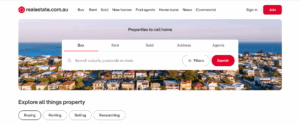
Realestate.com.au (REA) is Australia’s top property portal, many apps like Zillow in the U.S., and by 2026, it will remain the leading platform for buying, renting, or investing in property across the country.
REA stands out for its innovative use of technology, offering AI-powered search, virtual reality tours, and detailed property analytics. With Australia’s growing property market and rising international interest, the platform has become essential for both domestic and overseas buyers.
It also addresses Australia-specific market features, including the auction system in cities like Melbourne and Sydney, strata titles for apartments, and the distinction between freehold and leasehold properties. For international investors, REA provides crucial insights, comprehensive data, and connections with agents who understand the needs of buyers from abroad, making property search in Australia seamless and informed.
Key Features
- Nationwide Listings: All states and territories covered.
- Auction Data: Dates, results, and clearance rates.
- AI Price Estimates: Real-time property valuation.
- 3D & VR Tours: Interactive digital property viewing.
- Suburb Profiles: Lifestyle, demographics, and amenities.
- International Buyer Tools: FIRB guidance and stamp duty calculators.
Final Thoughts
The real estate landscape in 2026 offers more choice and sophistication than ever for property seekers around the world. While Zillow remains a major player in the U.S., alternatives like Realtor.com and Redfin provide more accurate, real-time MLS listings, giving buyers a competitive edge. For those focused on neighborhoods and lifestyle, Trulia delivers rich community insights, while Homes.com stands out for its clean, streamlined design and user-friendly experience.
International buyers also have excellent options. In the UK, Zoopla and Rightmove provide comprehensive coverage and market-specific features. India’s growing market is well served by MagicBricks and 99acres, which understand local property norms and emerging city markets. Canadian buyers can rely on Realtor.ca, backed by CREA, and Australian property seekers benefit from Realestate.com.au’s dominance and innovative tools.
Ultimately, the best platform depends on your needs, location, property type, and what matters most in your search. Many savvy buyers in 2026 use multiple platforms to combine strengths and gain a full view of the market. As technology advances, these platforms are becoming even smarter, integrating AI for personalized searches, virtual reality for remote viewings, blockchain for transactions, and predictive analytics for market trends.
Whether you’re a first-time buyer, an investor, or exploring international options, understanding each platform’s strengths can help you make informed decisions, save money, and find properties that truly fit your needs. The future of real estate search is digital, data-driven, and more user-focused than ever.